
Digital Natives Still Prefer Holiday Cards: New Shutterfly Survey Finds Physical Greetings Feel More Special
SAN JOSE, Calif., Nov. 5, 2026
Press Release Disclaimer: This is a press release distributed through the XPR Media network. It has not been independently verified by our newsroom.

Digital Natives Still Prefer Holiday Cards: New Shutterfly Survey Finds Physical Greetings Feel More Special
PR Newswire
SAN JOSE, Calif., Nov. 5, 2026
New research finds Gen Z and Millennial consumers value thoughtful, tangible holiday traditions, with physical cards outperforming digital greetings and effort outranking expense
SAN JOSE, Calif., Nov. 5, 2026 /PRNewswire/ — Shutterfly, the leading e-commerce brand for personalized photo products and custom designs, today announced findings from its new holiday survey, revealing that Gen Z and Millennials place a premium on the time, effort, and personal touches invested in tangible holiday cards and gifts.
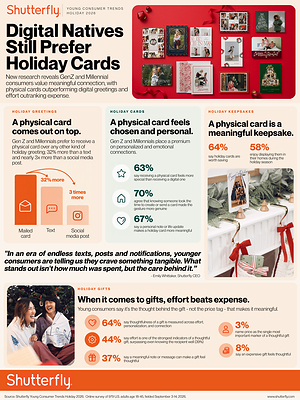
For the generations accustomed to instant digital communication – and now experiencing digital fatigue – it’s the tangible, personalized gestures that carry distinct value. Sixty-three percent say receiving a physical card feels more special than receiving a digital one, reflecting the importance they place on personalized and emotional connections. For Gen Z and Millennials, thoughtfulness is the currency that matters most this holiday season.
“In an era of endless texts, posts and notifications, younger consumers are telling us they crave something tangible,” said Emily Whittaker, CEO of Shutterfly. “What stands out isn’t how much was spent, but the care behind it. Whether it’s a holiday card with a personal note or a personalized gift that captures a shared memory, people place greater value on gestures that feel intentional.”
Holiday Cards Are Meaningful Keepsakes
Despite being digital natives, more than half (56%) of Gen Z and Millennial consumers say physical holiday cards still feel relevant to people their age. According to the research, Gen Z and Millennials prefer to receive a physical card over any other kind of holiday greeting; 32% more than a text and nearly three times more than a social media post. In fact, 64% view a holiday card as something to keep, and 58% like having cards to display at home.
What makes the holiday card meaningful is the effort behind it. For generations raised on instant communication, a physical card has become the unexpected premium experience – not because it costs more, but because it feels chosen and personal. Seventy percent agree that knowing someone took the time to create or send a card makes the holiday greeting feel more genuine. Sixty-seven percent say a personal note or life update makes a card more meaningful.
That thoughtfulness extends well beyond the moment a card arrives, helping people feel connected, celebrate relationships and preserve memories in a tangible way. For many consumers, they’re more than a seasonal greeting. They’re a keepsake worth saving.
- 63% say receiving a physical card feels more special than receiving a digital one
- 70% agree that knowing someone took the time to create or send a card made the gesture more genuine
- 64% say holiday cards are worth saving, and 58% enjoy displaying them in their homes during the holiday season
- The most valued card elements are a personal note written specifically for the recipient (45%) and photos of friends and family (39%)
- 67% say a personal note or life update makes a holiday card more meaningful
When it comes to gifts, effort beats expense
The same desire for intentional touches extends under the tree. When younger consumers were asked what makes a gift feel thoughtful, nearly two-thirds (64%) report effort, personalization, and connection as the top factors. Forty-four percent cite effort as the most important quality in a gift while just 3% rank price first. Personalized gifts, notes and photo-driven products resonate because they communicate effort and intention, qualities consumers associate with meaningful gifting.
Among Gen Z and Millennials:
- Nearly two thirds (64%) say thoughtfulness of a gift is measured across effort, personalization, and connection
- 44% say effort is one of the strongest indicators of a thoughtful gift, surpassing even knowing the recipient well (39%)
- Only 8% say an expensive gift feels thoughtful
- Just 3% name price as the single most important marker of a thoughtful gift
- More than one-third (37%) say a meaningful note or message can make a gift feel thoughtful
“These findings suggest that meaningful holiday giving is defined by emotional connection rather than dollar value,” said Whittaker. “The best gifts feel personal. They celebrate the relationship, capture a shared story, and create memories that last beyond the holidays.”
About the Survey
The Shutterfly Young Consumer Trends Holiday 2026 survey was conducted online among 979 U.S. adults ages 18-45 from September 3-14, 2026.
About Shutterfly
Shutterfly and its family of brands make up one of the leading e-commerce companies for personalized products and custom design. Shutterfly is organized into three divisions: Consumer, Lifetouch and Shutterfly Business Solutions. Our flagship brand, Shutterfly, is the go-to destination of choice to discover, design and purchase unique and personalized items. Learn more at www.shutterfly.com and follow us @shutterfly.
Contact:
Shutterfly@laforce.nyc

 View original content to download multimedia:https://www.prnewswire.com/news-releases/digital-natives-still-prefer-holiday-cards-new-shutterfly-survey-finds-physical-greetings-feel-more-special-302929900.html
SOURCE Shutterfly



